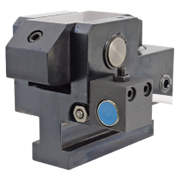
GJC Clamp【T-Slot Manual Slide/Incomplete Clamp Detection/Longer Stroke】 (for Injection Molding Machine)

ModelGJC

Single Action
25MPa

GJC
Detects Incomplete Mold Clamping for Enhanced Safety.
Prevent human error in mold mounting plate thickness settings.
Eliminate the need for manual clamp verification.
Longer stroke allows for variation in mold clamping thicknesses.

Product Information

Action Description

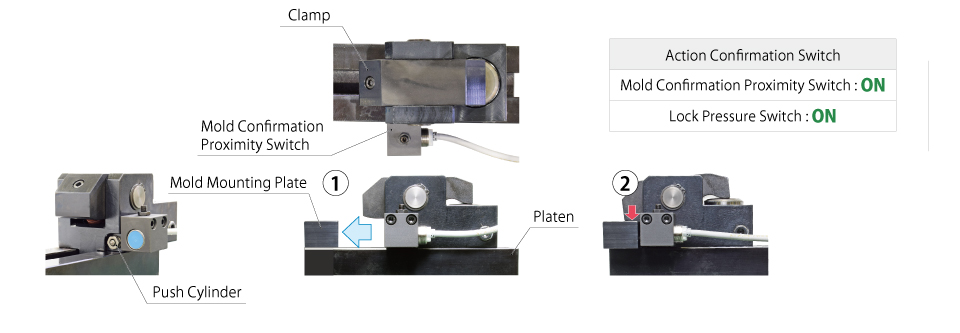
①Advance the clamp manually.
②The clamp locks the mold.

Model GJC auto clamp advancing to lock the mold

③The push cylinder advances and pushes the side of the mold mounting plate.

Model GJC push cylinder pushing the side of the mold mounting plate

Sequential operation from ② to ③ is possible with a single hydraulic circuit!

Incomplete Clamp Detection

【Normal】
When properly locked: The clamp will not retract because it is locked!

The clamp does not retract by the push cylinder because it is locking the mold.
he mold confirmation proximity switch maintains the ON state to ensure secure locking.

Ensures reliable lock verification!

Model GJC with incomplete clamp detection confirming proper clamp lock. The push cylinder presses the mold, and the clamp does not retract.

【Abnormal】
When a locking failure occurs: Due to the locking failure, the clamp will retract!

Despite the clamp being in the locked state, a gap exists between the clamp and the mold mounting plate, preventing proper locking. As a result, the clamp is retracted by the push cylinder. The mold confirmation proximity switch turns OFF, enabling detection of improper locking. If improper locking is detected, the interlock triggers an emergency stop of the molding machine, ensuring safety.
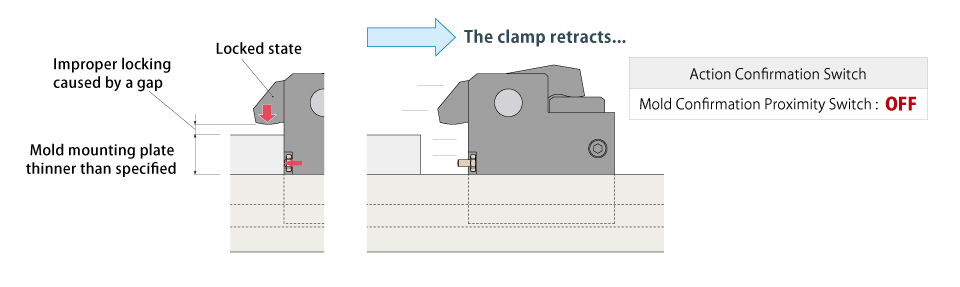
Locking failure can be detected!

Model GJC with incomplete clamp detection detecting a lock failure. The push cylinder presses the mold, and the clamp retracts due to improper locking.

Implementation Examples

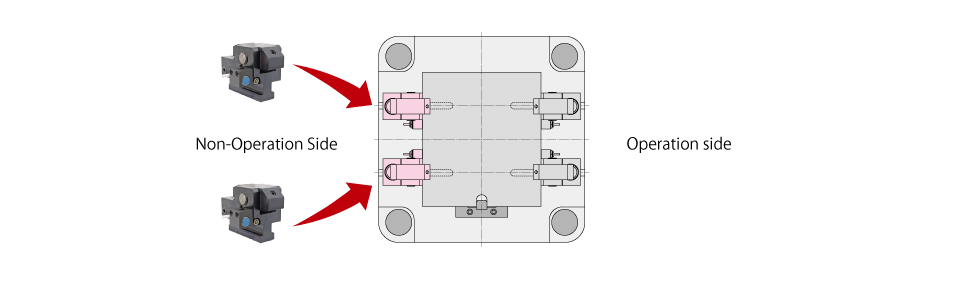
Incomplete Clamp Detection on the Non-Operation Side Clamps

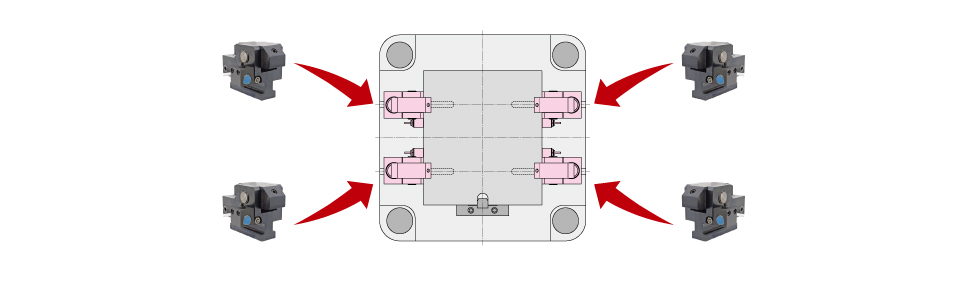
System configuration using Model GJC auto clamps with incomplete clamp detection on the non-operator side

Lock Confirmation—Safe, Reliable, and Efficient.

【Before】

To ensure that the mold is securely locked, the operator must walk around to the non-operation side and manually pull the clamps to verify proper locking.

Before installation of auto clamps with incomplete clamp detection, an operator checks the clamp lock status on the non-operator side of the injection molding machine.

【After】
No Pull-Check Verification Required!
No Need to Walk Around to the Non-Operation Side After Locking.

If the mold is not properly locked by the clamp, the clamp will be retracted by the push cylinder.
Ensures reliable detection of incomplete clamping.
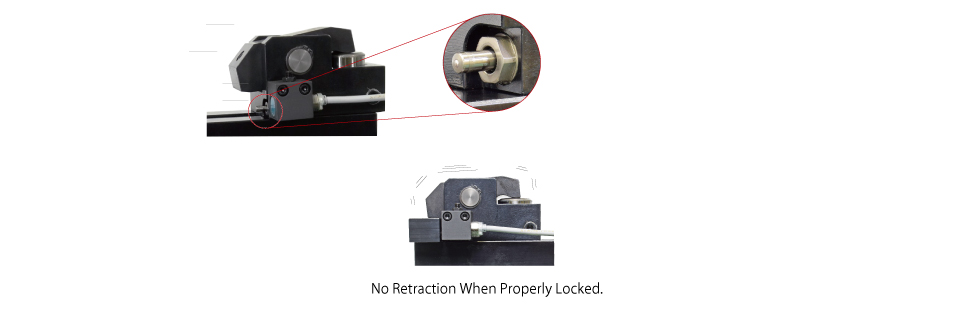

After installation of auto clamps with incomplete clamp detection, the push cylinder retracts the clamp to verify a locking error.

・Reduced Walking Distance for Less Fatigue
・Fewer Trips to the Non-Operation Side

Enhanced Safety and Productivity with Incomplete Clamp Detection

Incomplete Clamp Detection on All Clamps

System configuration using Model GJC auto clamp with incomplete clamp detection on all clamps for an injection molding machine.

Lock Confirmation—Safer, More Reliable, and More Efficient.

・No Pull Checks Required, Even on Operation Side
・Safer and Faster Operation
・Even Missing Spacers Can Be Detected!

Detection of a missing spacer using the incomplete clamp detection function

FAQ

Q.Can the incomplete clamp detection function be added to an existing system that uses proximity switches?

A.Yes.
The function can be added by replacing the existing clamps with models equipped with the incomplete clamp detection function. Existing proximity switches can continue to be used. Clamps can be replaced individually.
However, replacement of all clamps is recommended for improved safety.

Q.Can the YMC Control Unit continue to be used as is?

A.Program modification of the YMC Control Unit is recommended.
For details, please contact us.

Q.Is a separate hydraulic circuit required for the push cylinder used for incomplete clamp detection?

A.No.
When lock hydraulic pressure is supplied to the clamp, the push cylinder operates sequentially after lever operation. Therefore, it is not necessary to add a dedicated hydraulic circuit for the push cylinder.

Q.Are any rust-prevention measures available for use in corrosive environments?

A.Select Option R3: Anti-Rust model for use in corrosive environments.

Featured Recommendations